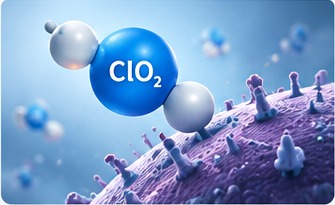
1. Makes Contact
ClO₂ reaches exposed microbial surfaces and reactive targets.
Clear, source-backed information about chlorine dioxide chemistry, microbial control, mold research, odor applications, water treatment and established uses.
EXPLORE THE FACTSChlorine dioxide (ClO₂) is a reactive oxidizing agent with chemistry distinct from chlorine bleach. Its properties have led to established uses in drinking-water treatment, industrial water systems and specialized microbial-control applications.
Performance depends on the organism, concentration, contact time, temperature, humidity, organic load and application method.
 MICROBIAL SCIENCE
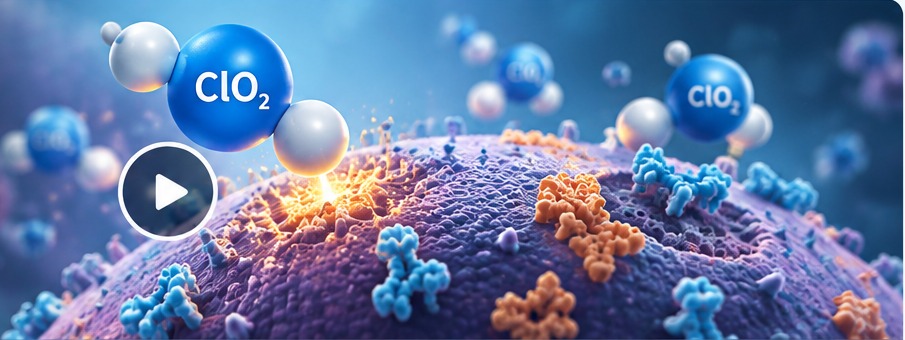
Chlorine dioxide (ClO₂) is a selective oxidizing agent. The artwork below shows the four-stage oxidation concept from contact through microbial inactivation. Actual efficacy depends on organism, concentration, contact time and environmental conditions.
ClO₂ reaches exposed microbial surfaces and reactive targets.
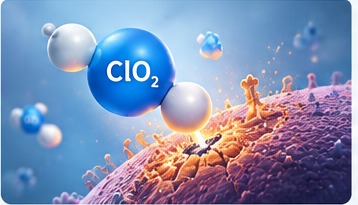
Reactive chemistry modifies susceptible proteins and other biomolecules.
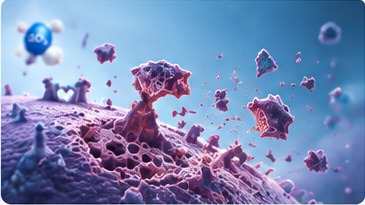
Oxidative damage can interfere with membrane integrity and critical biological processes.
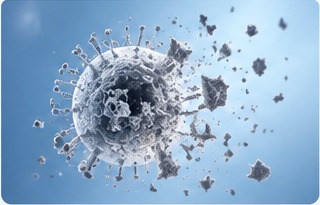
When sufficient oxidative damage occurs, the microorganism can no longer maintain normal function or replication.
EPA laboratory research evaluated ClO₂ fumigation against five molds on latex-painted and wallpapered gypsum wallboard, pine wood, ceiling tile, carpet and glass. The work measured viable mold as well as selected allergen and mycotoxin outcomes.
The EPA report also describes conventional remediation fundamentals: identify and correct moisture sources and remove waterlogged materials where appropriate. Chemical treatment is not a substitute for fixing the water problem.
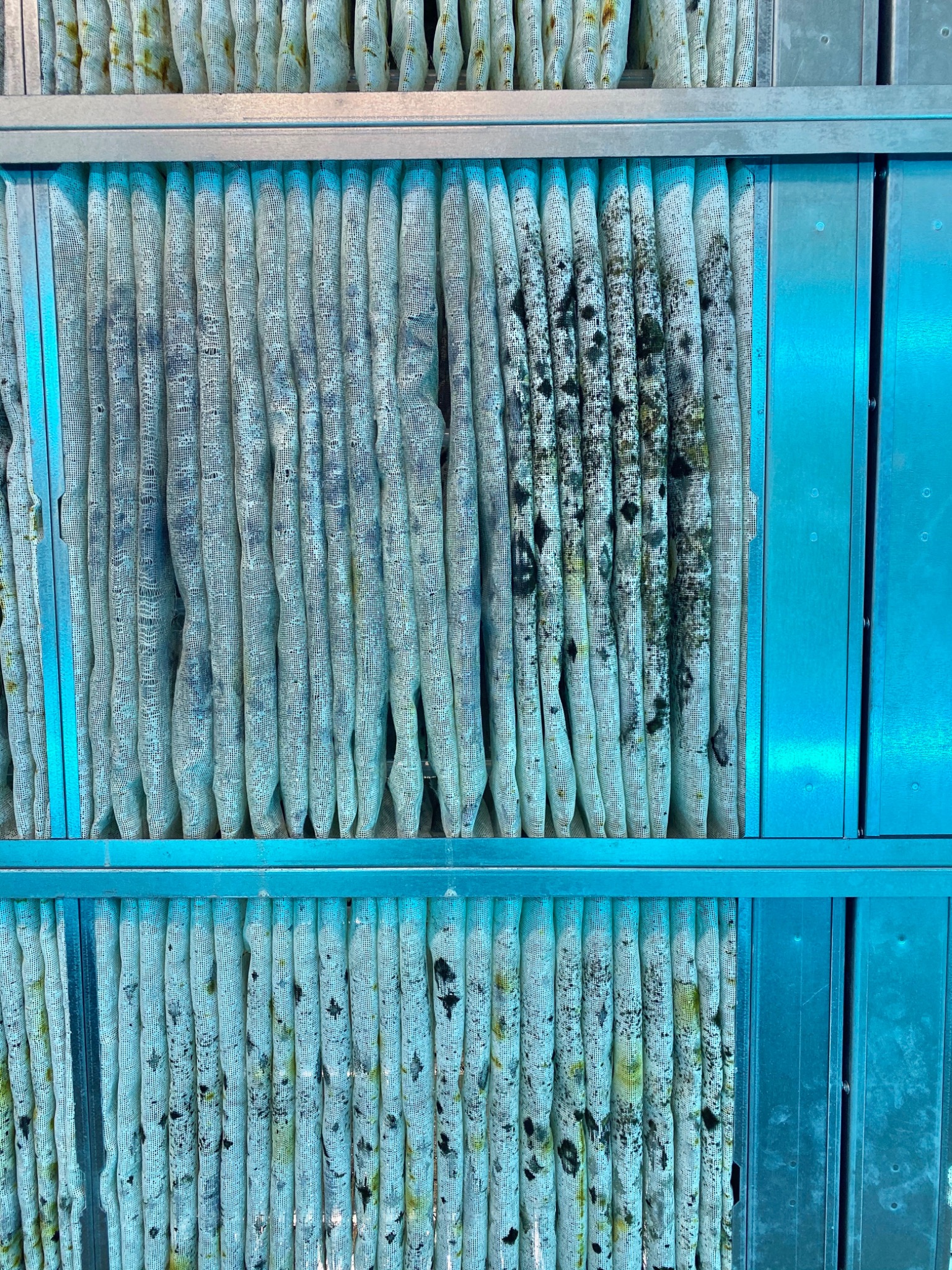 WATER DAMAGE + MICROBIAL GROWTH
 Stachybotrys chartarumCOMMONLY CALLED “BLACK MOLD”
Included in the EPA building-material study.
Image: Dr. Sahay / Wikimedia Commons, CC BY-SA 3.0 Chaetomium globosumRESISTANT SPORE STRUCTURE
Selected because of resistance to adverse conditions.
Image: Wikimedia Commons; see source page for license Aspergillus fumigatusINDOOR / ENVIRONMENTAL MOLD
One of five species evaluated by EPA.
Image: CDC / Dr. Libero Ajello, PHIL 4297 Aspergillus versicolorINDOOR MOLD
Evaluated on representative building materials.
Image: Wikimedia Commons; see source page for license Alternaria alternataDAMP-BUILDING MOLD
Viability and related allergen measurements were examined.
Image: Yulianna.x / Wikimedia Commons, CC BY-SA 4.0The report found greater than 4-log₁₀ reduction for the five tested species at 9000 ppmv-hour, 75°F and 75% RH on several tested materials. This is a controlled laboratory result, not a field-use recipe or universal performance guarantee.
The comparison artwork below presents the different mechanisms, reach and practical limitations of these technologies, including biofilm and HVAC surface considerations.
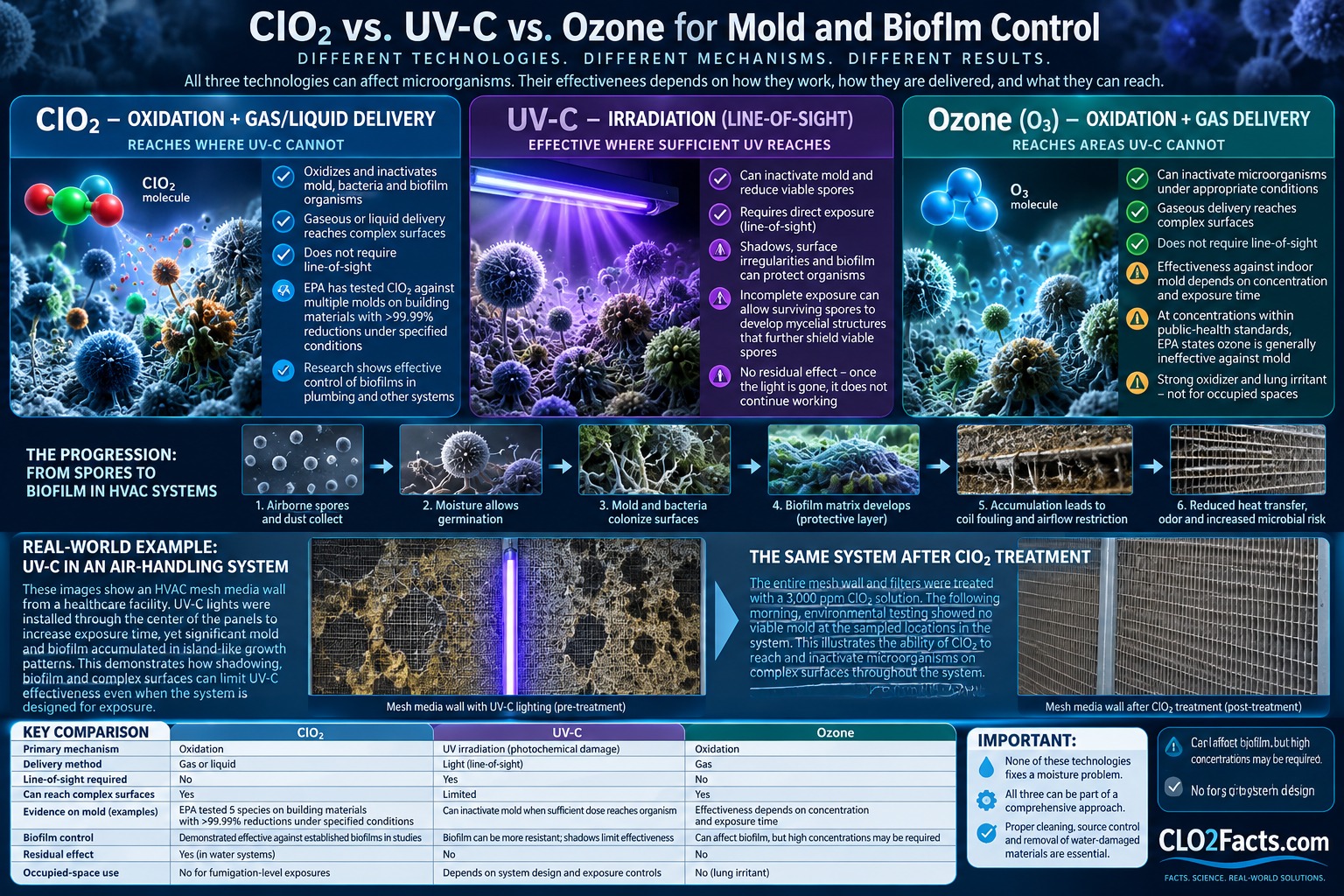
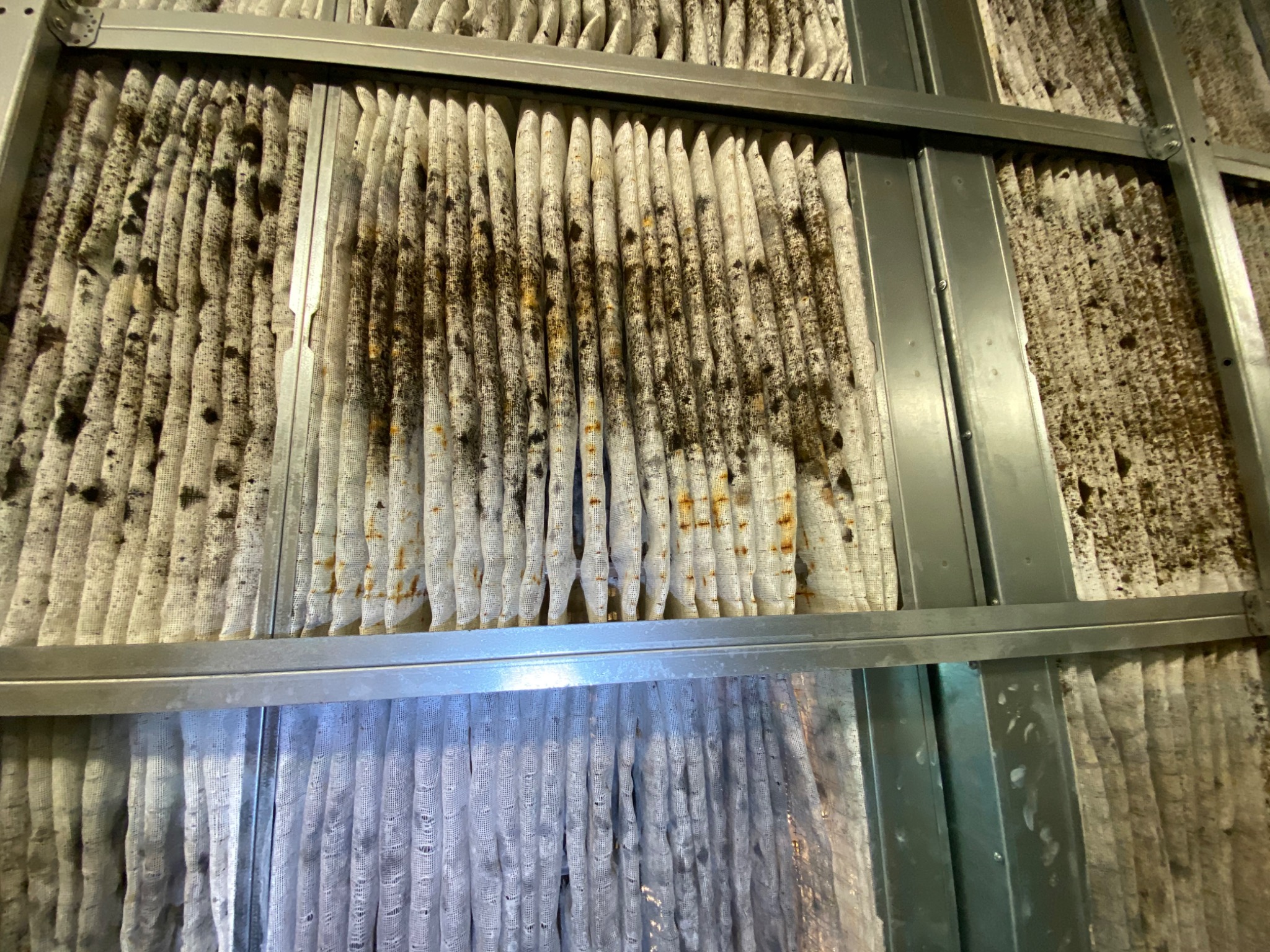
The HVAC-media photographs in the comparison are user-supplied field images. They document visible contamination conditions. Because the facility's laboratory reports are not available for publication, the field event is presented as an application example rather than independently verified efficacy data.
 Mold Remediation Research
Controlled research has evaluated ClO₂ against molds on water-damaged building materials.
Mold & Mildew OdorOxidizing chemistry can address certain odor-causing compounds; moisture sources still must be corrected.
 Bacteria & Microbes
ClO₂ has documented antimicrobial applications under specified conditions.
 Facilities & Environments
Specialized decontamination applications have been documented.
 Water Treatment
ClO₂ is used in public-water treatment and other water applications.
 Food & Industry
Permitted uses depend on the product, formulation, label and applicable regulation.
EPA/600/R-13/229 evaluated five mold species on representative building materials.
VIEW EPA REPORT →Peer-reviewed controlled fungal research examining susceptibility and treatment conditions.
READ STUDY →Occupational hazard information, physical properties and exposure limits.
VIEW NIOSH →A comparative model plumbing study found chlorine dioxide and chlorine among the most effective tested treatments, with ClO₂ showing longer residual activity.
READ STUDY →EPA research found surface inactivation on building materials difficult even at relatively high ozone concentrations.
VIEW EPA REPORT →Concentrations used in controlled research can be far above occupational exposure limits. Professional controls, monitoring, product labeling and applicable regulations matter.